Sobre
Como tudo começou
O festival nasceu de uma frustração simples. Não havia em Berlim onde ver filmes portugueses, e quando se visitava Portugal só se apanhava o que estivesse em cartaz nessa semana. Para a sua fundadora, Helena Araújo, a solução lógica era trazer os filmes para cá. Mobilizou a sua própria rede de contactos e, juntamente com um círculo crescente de parceiros, criou esta mostra. Se a montanha não vai a Maomé, a montanha vem a Berlim.
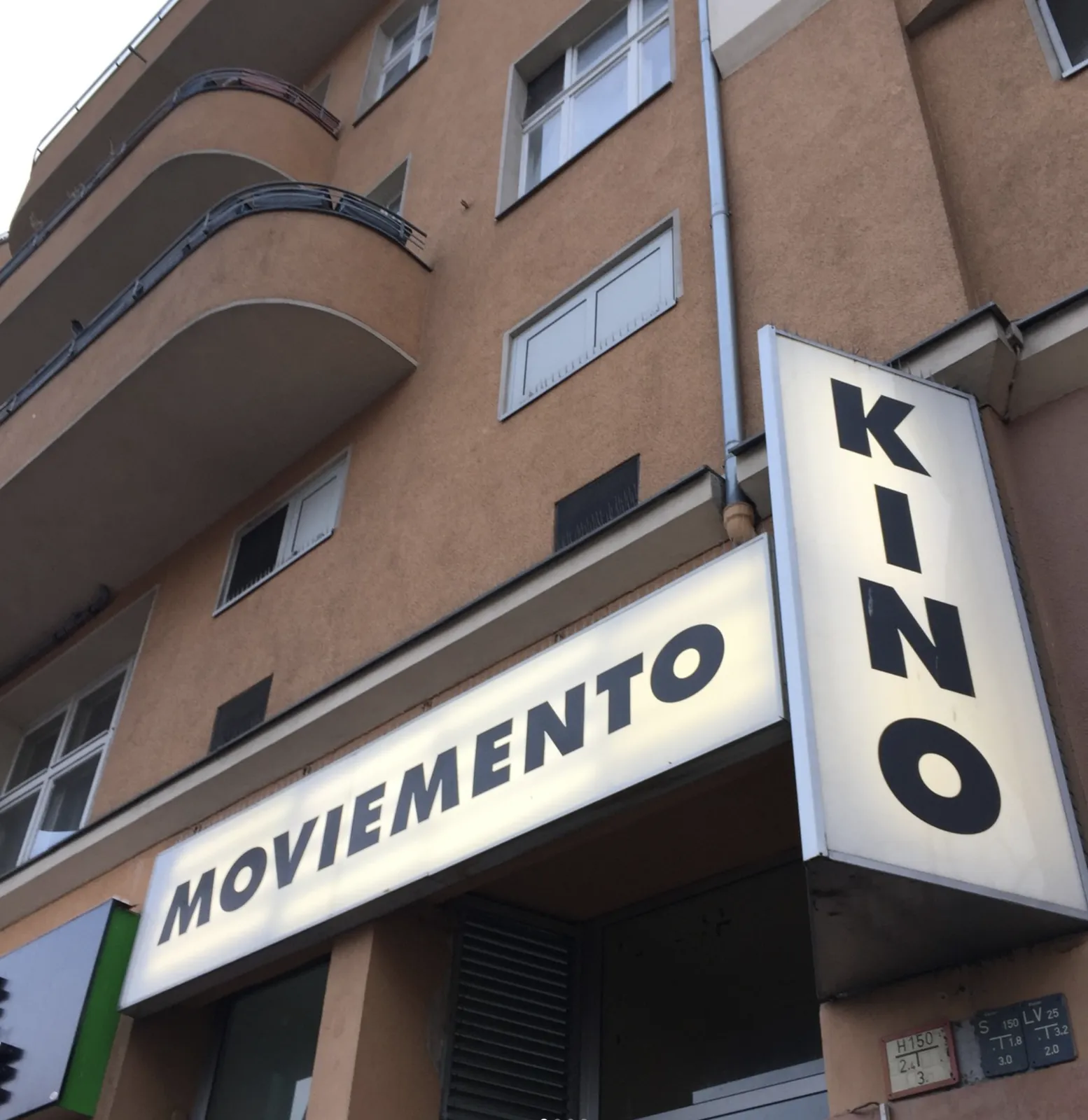
Desde 2018, exibimos cinema português recente no Moviemento, em Kreuzberg, um dos cinemas independentes mais antigos da Europa. Longas-metragens, documentários e curtas-metragens premiados, em versão original com legendas em inglês.
Mas os filmes são apenas metade de tudo isto: os realizadores que nos acompanham, as conversas depois de as luzes se acenderem, um copo de vinho do Porto, um ou outro pastel de nata. É, no sentido mais afetuoso, uma embaixada informal da cultura portuguesa em Berlim.
As pessoas por detrás do festival
O Portuguese Cinema Days é obra de uma equipa pequena e dedicada, reunida em torno da sua fundadora, Helena Araújo, juntamente com um círculo crescente de parceiros, curadores e amigos. Ano após ano, é o seu tempo voluntário que transforma uma sala cheia de cadeiras num festival.
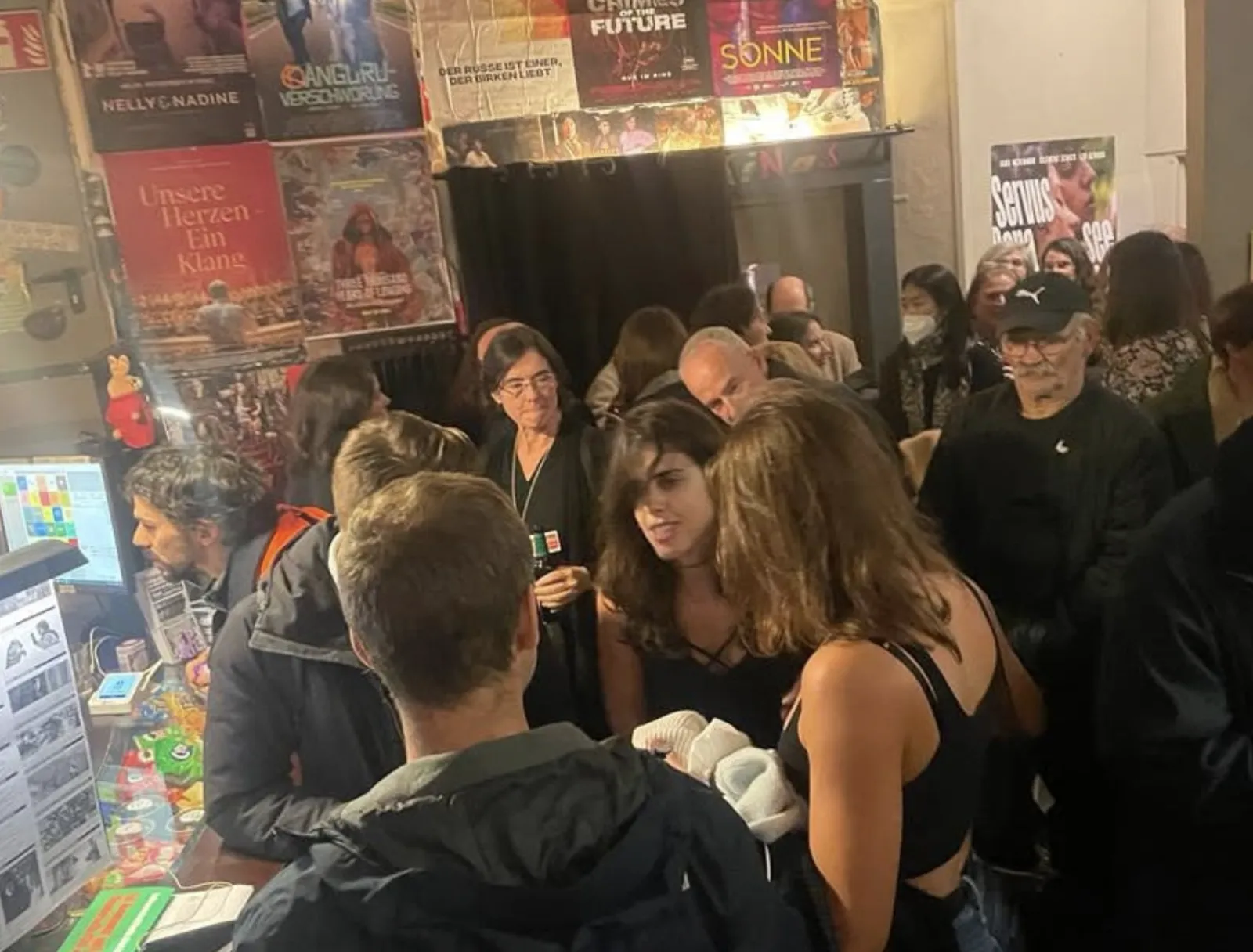
As portas abrem-se, a sala enche-se e as luzes apagam-se. Ao longo dos anos, o festival tem reunido berlinenses, a comunidade de língua portuguesa da cidade e recém-chegados curiosos, um público tão presente pelo encontro como pelos próprios filmes.
As sessões decorrem na sala intimista do Moviemento, com as filas a encherem-se enquanto o projetor aquece. E quando o filme termina, as luzes raramente mandam toda a gente para casa: mais frequentemente o realizador avança até à frente, um microfone passa de mão em mão e a noite transforma-se numa conversa.
A noite raramente termina com os créditos
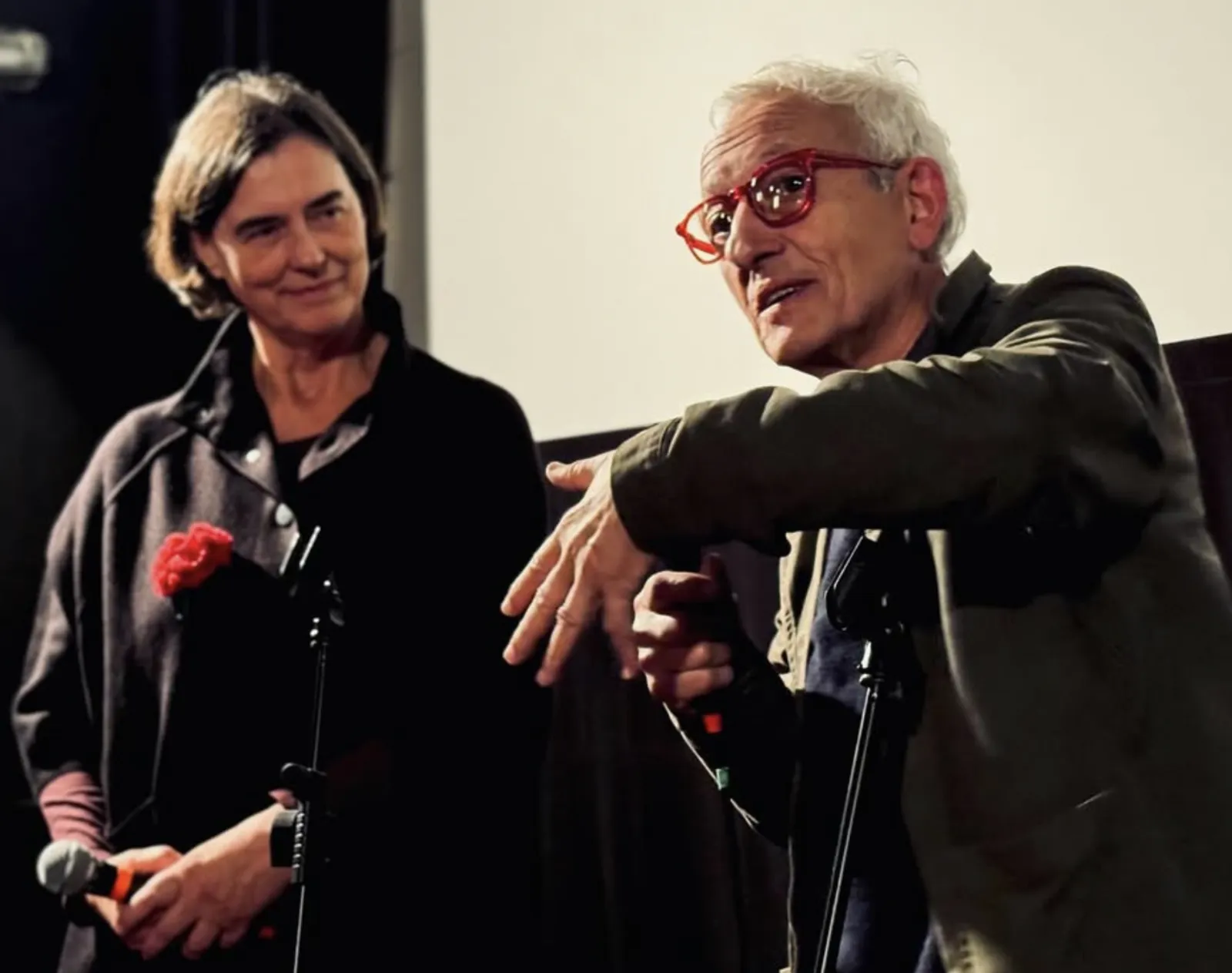
Alguns dos melhores momentos acontecem depois de os créditos terem passado. Realizadores, atores e equipa avançam até à frente da sala e respondem às perguntas do público, sobre um plano, uma decisão, uma memória, muitas vezes bem depois da hora que o projecionista tinha em mente. Cada edição traz cineastas a Berlim, muitos dos quais mostram o seu trabalho a um público alemão pela primeira vez. De pé diante do ecrã do Moviemento, apresentam filmes que viajaram com eles de festivais por todo o Portugal e por todo o mundo de língua portuguesa.
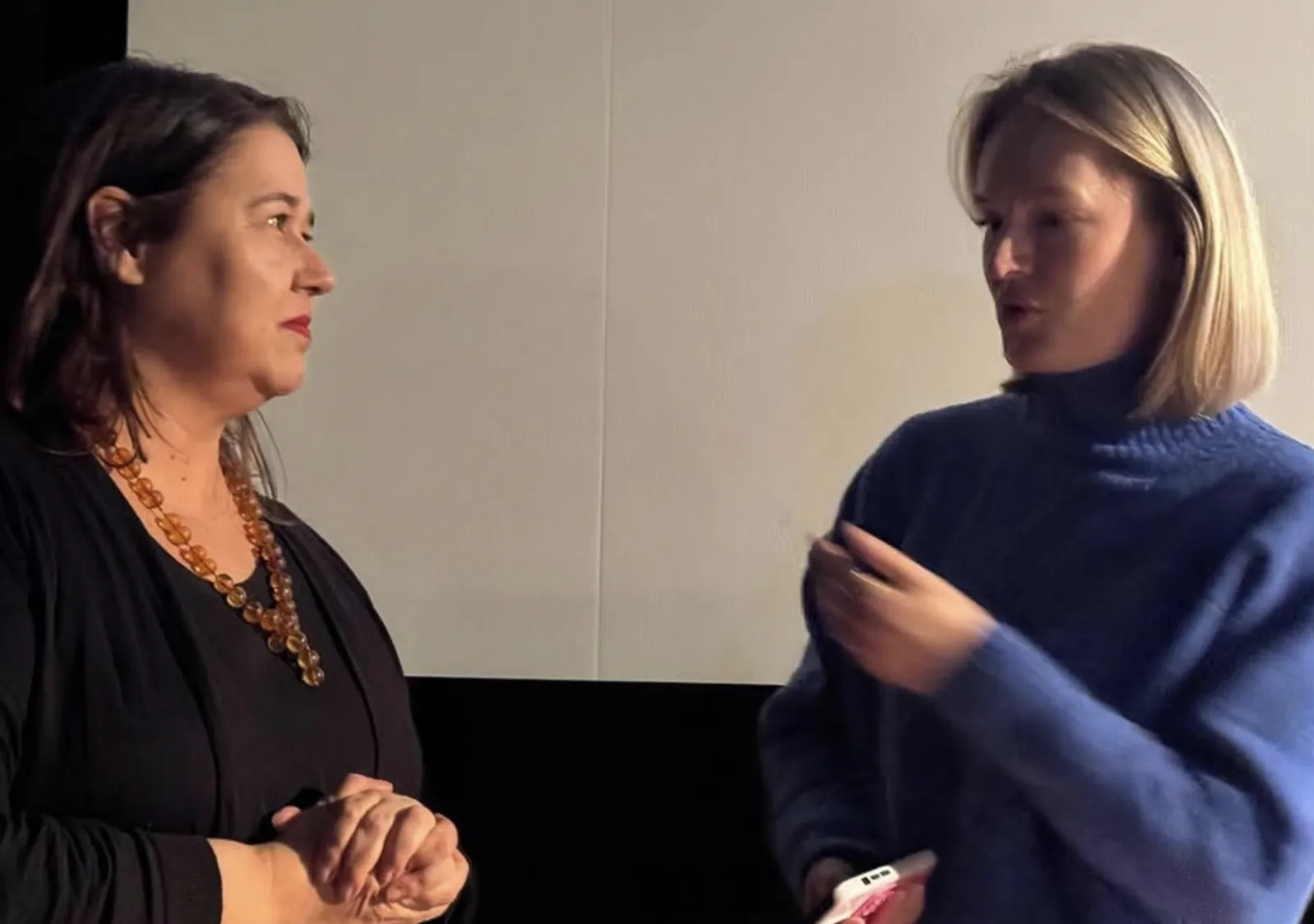
Um microfone, uma pergunta de seguimento, uma gargalhada: o diálogo entre a sala e as pessoas que fizeram o filme é onde o festival ganha vida. Rigoroso na curadoria e caloroso no acolhimento, é inconfundivelmente português em ambos. Para muitos dos que vêm, o encontro conta tanto como o filme: a oportunidade de conhecer a pessoa que o fez, de ouvir a história por detrás da história e de levar um pouco do cinema português de volta para a noite berlinense.
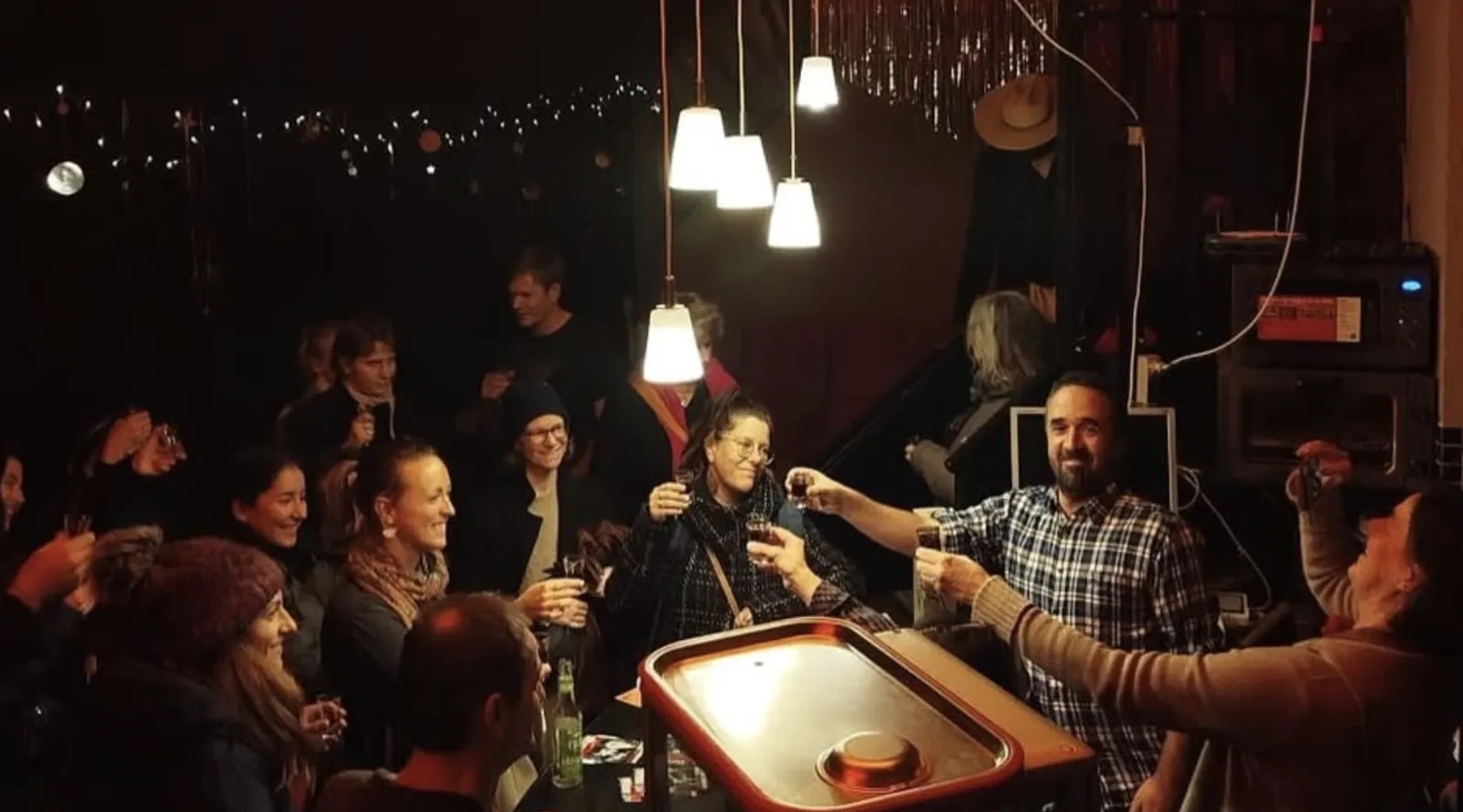
Quando as luzes se acendem, o festival estende-se até ao bar. Serve-se um copo de vinho do Porto, passa uma bandeja de pastéis de nata e ergue-se um brinde sob os fios de luzes, os créditos são apenas o sinal para a segunda metade da noite. Atrás do balcão há sempre vinho do Porto e algo doce de uma pastelaria portuguesa. É uma coisa pequena, mas é ela que transforma uma sessão numa noite, e o bar no coração caloroso e informal do festival.
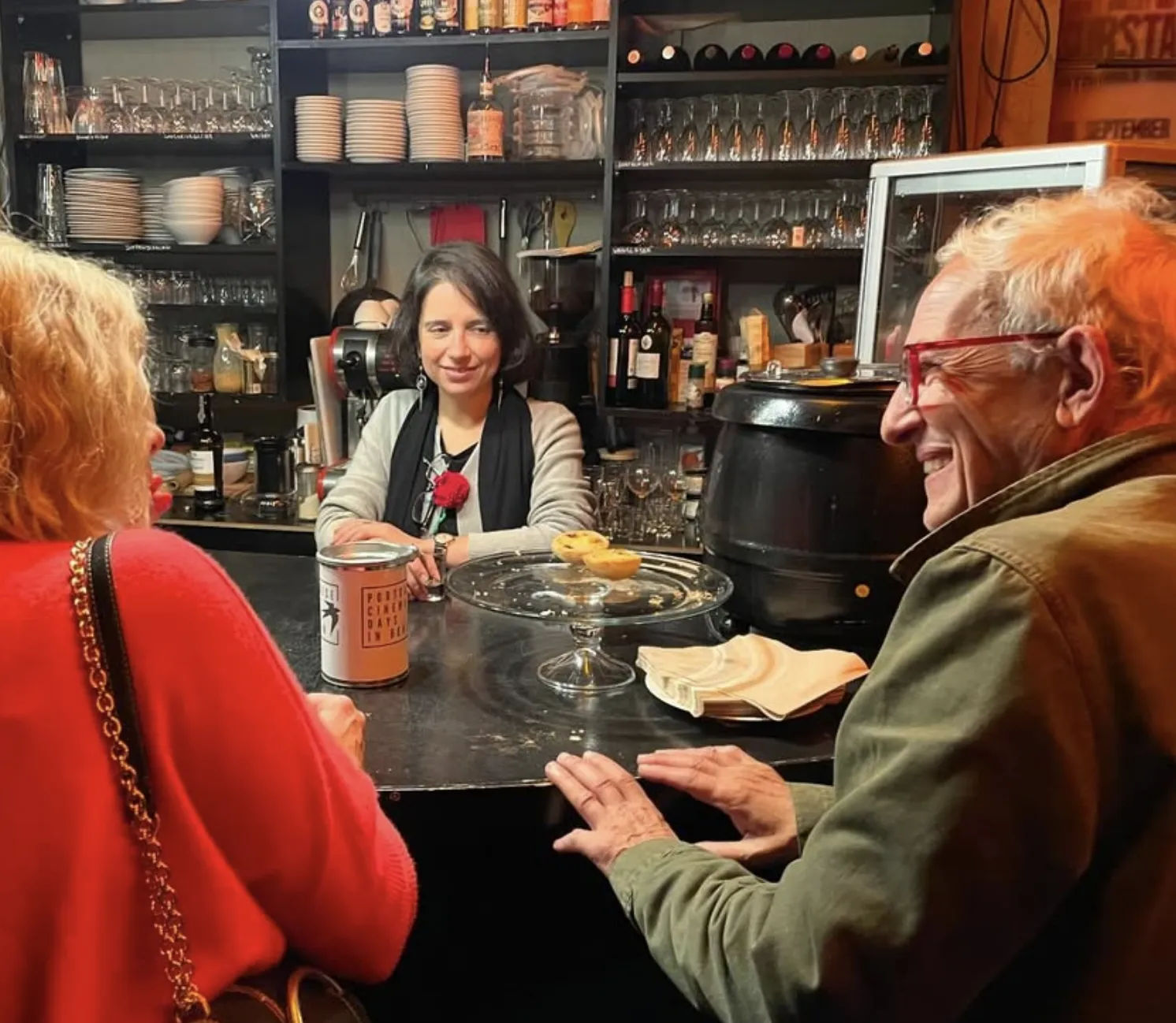
Cineastas, frequentadores habituais e quem vem pela primeira vez acabam em torno das mesmas mesas, copo na mão. Ano após ano, são estas conversas, tanto quanto os filmes, que fazem as pessoas voltar. Ao fim da noite, o bar parece menos um foyer de cinema e mais uma sala de estar longe de casa, um canto de Berlim onde o cinema, a língua e a companhia portugueses se encontram, e onde todos são bem-vindos para ficar um pouco.